Holistic Health Assisting Others To Heal and Thrive
Everyone can integrate the rigor of facts and intuition with empathy and pattern recognition with holistic protocols by combining evidence-based learning with effective neuroscience, body awareness, and holistic practices. The majority of people are indoctrinated to believe that anyone over 75 has one or both feet in the grave. I have assisted people with Transformation Hypnosis in their 80's and 90's to resolve an issue to live more fully.
1. My education is in both awareness and the human context
Holistic practices offers precise protocols, evidence-based treatment, and practices are essential for accuracy and safety. Holistic research shows that emotional engagement activates the same brain systems that keeps you alive, and without it, all knowledge is less likely to be applied effectively. This means that learning protocols is not just about memorizing facts—it’s about developing the capacity to connect with people's lived experiences.
2. Cultivate “Holistic intuition” through disciplined practice
Holistic intuition is not guesswork; it’s a refined ability to intuitively detect patterns, subtle cues, and systemic imbalances that never appear in lab results. You can develop this by:
Body awareness: Learning to notice your own thoughts and body sensations, stress responses, and energy states.
Observational skills: Learning to read non-verbal cues, posture, breathing patterns, and other subtle indicators.
Reflective practice: Keeping case notes that include both observable findings and your impressions, then reviewing them for patterns. Thus, becoming a detective to understand what each pattern means and how you need to revise or remove the pattern to have more effectiveness and efficiency in your life.
3. Use integrative learning models
Integrative holistic education blends intuitiveness with complementary protocols, cultural contexts, and human-centered care.
This paradigm:
Encourages exposure to holistic and often overlooked healing modalities.
Teaches people to ask “What else might be contributing?” beyond the observable beliefs, actions and outcomes.
Supports skills in Holistic Mental, Emotional and Physical Health care, lifestyle guidance, support.
4. Apply a “whole-person” decision framework
When faced with a case, you can:
Gather and interpret all data--Conscious, Unconscious and Subconscious - Self-reporting and the use of Transformation Hypnosis.
Assess the whole person - childhood and adult experiences, emotional state, social environment, cultural beliefs.
Identify gaps - intuition and holistic perspective are key to complete recovery--nothing is incurable.
Integrate both intuition and a holistic perspective into a care plan that is evidence-based and compassionate.
5. Practice in environments that model integration
Seek internships, clinics, or research projects that provide holistic care. Observing how experienced clinicians balance these approaches will help internalize the skill.
In short: Treat Intuition and Holistic protocols as your foundation, and Transformation Hypnosis as a complementary lens that deepens understanding and connection. This approach allows you to offer care that is accurate, compassionate, and truly holistic.
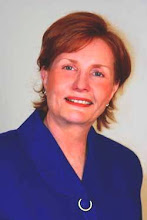
Dorothy M. Neddermeyer, Ph.D. - https://drdorothy.net
Executive and Business Health Consultant
International Best Selling Author - Conceived To Lead: Dismantling The Glass Ceiling Mindset
Board Certified Transformation Hypnosis and Past Life Regression